

HAPS stands for high-altitude platform station, also called a high-altitude pseudo-satellite. A HAPS is an uncrewed balloon, airship or aircraft that carries cameras, sensors or communications equipment into the stratosphere, about 20 km above the Earth, and works from there for days, weeks or longer.
Think of it as something between a cell tower and a satellite: high enough to see or serve a huge area, but close enough to give sharp images and strong signals, and to come back down for repairs and upgrades.
HAPS at a glance
Stands for: high-altitude platform station (also high-altitude pseudo-satellite, high-altitude platform system or atmospheric satellite).
Altitude: 20 to 50 km by the international definition; most designs work at about 20 km, above airliners and most weather.
Types: balloons, airships and aircraft.
Uses: wide-area observation and surveillance, communications and internet coverage, emergency response and science.
Why it matters: one platform can watch or connect an area hundreds of kilometres across, for long periods, without a rocket launch.
What does HAPS stand for?
The most common meaning is high-altitude platform station. That is the official term used by the International Telecommunication Union (ITU), the United Nations agency that coordinates radio spectrum. You will also see:
High-altitude pseudo-satellite, common in the UK and in aerospace, because a HAPS can do part of a satellite's job without going to orbit.
High-altitude platform system, which stresses that a HAPS is a whole system: the platform, its payload, ground control and data links.
Atmospheric satellite, a term used mostly in the United States.
All four describe the same idea. (Not to be confused with HAPs, the abbreviation for hazardous air pollutants.)
What does a HAPS do?
A HAPS is a platform: what it does depends on the equipment, or payload, it carries. From the stratosphere it can link to satellites above, to other platforms, and to people, vehicles and ships on the ground.
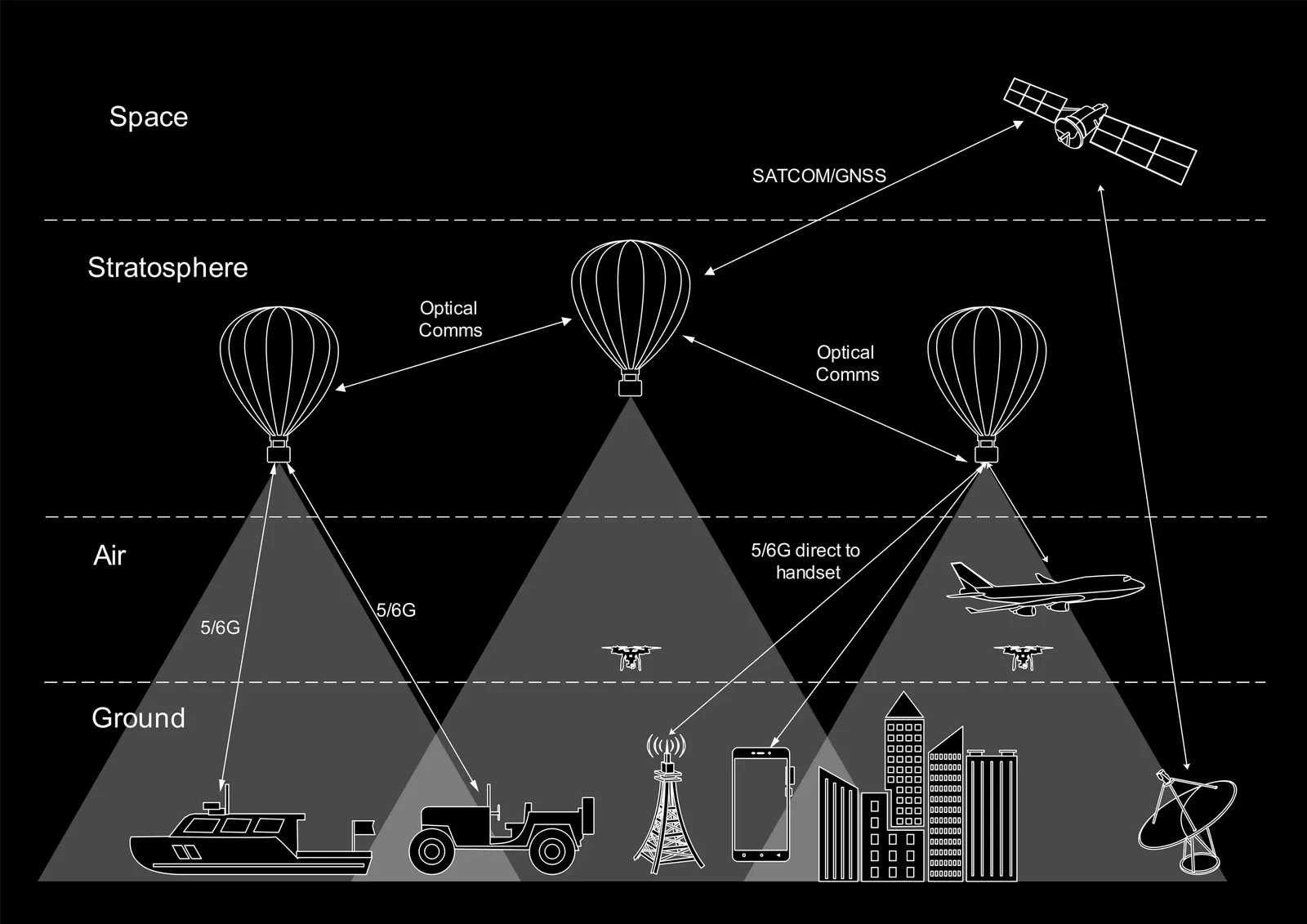
Earth observation and surveillance. Cameras and sensors watch a wide area continuously, for wildfire monitoring, disaster assessment, border and maritime awareness, defence intelligence, surveillance and reconnaissance (ISR), and environmental change.
Communications. Radio equipment acts like a very tall cell tower or relay, filling coverage gaps in remote areas or restoring service after a disaster takes networks on the ground offline.
Science and testing. Instruments measure the atmosphere, observe the sky above most of the air, or test equipment headed for space.
For wildfire response, a persistent view is the point. A satellite pass or an aircraft scan captures a moment, but a fire keeps moving. We are developing StratoHAB to help crews follow a fire's perimeter and spot new hotspots from above. Read more about our wildfire mission.
How high do HAPS fly?
The ITU's Radio Regulations define a high-altitude platform station as one on an object 20 to 50 km above the Earth. Most current designs work near the bottom of that range, at roughly 20 km (about 65,000 ft). At that height, a platform is:
Above airliners, which mostly cruise at around 10 to 12 km.
Above most weather. Clouds and storms stay mainly in the layer below.
In gentler winds than the jet stream beneath it, which makes it easier to stay over one area.
Looking a long way. From 20 km, the horizon is roughly 500 km away.

How high can a high-altitude balloon go?
It depends on the balloon. A weather balloon keeps rising until it bursts, usually somewhere around 30 to 35 km. Large scientific balloons can float near 40 km. A HAPS balloon is different: rather than climbing as high as possible, it is designed to stay at a working altitude near 20 km and keep doing its job there.
Types of HAPS: balloons, airships and aircraft
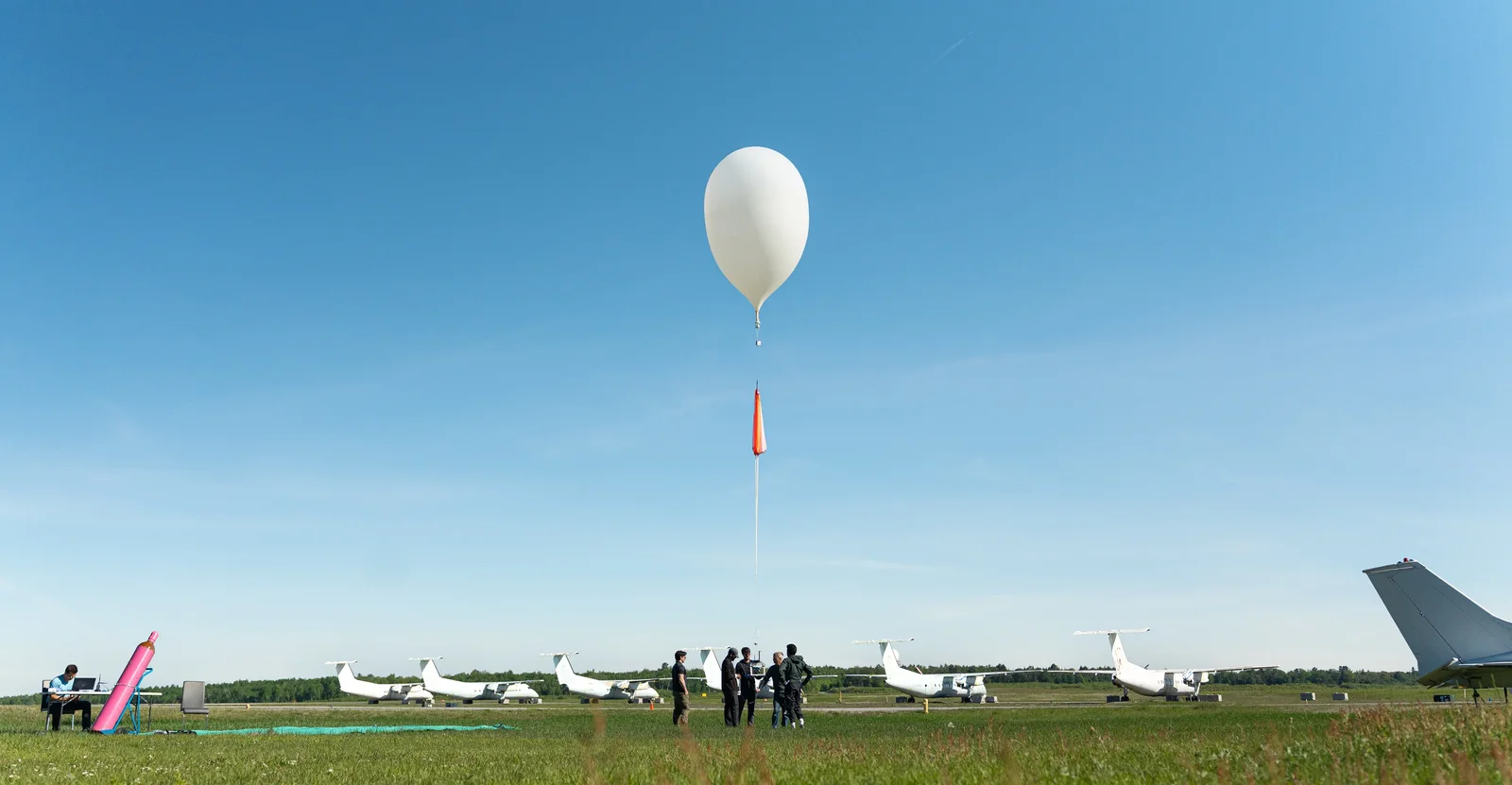
Balloons are lifted by gas, so they need no engine to stay up. Free balloons drift with the wind. Navigable balloons, like StratoHAB, change altitude to ride winds heading where they need to go. They are simple and carry useful payloads.
Airships are large, powered lighter-than-air craft that use propellers to hold position, at the cost of size and complexity.
What does a HAPS carry?
The payload is what makes a HAPS useful. On StratoHAB, a modular gondola hangs beneath the balloon and carries the mission equipment:
Cameras and sensors, on a gimbal that keeps them pointed at the area of interest.
Communications, including a satellite link that connects the balloon with the team on the ground.
Flight electronics that manage navigation, power and the mission equipment.
A reaction wheel that turns the gondola and keeps the cameras steady.

HAPS vs satellites, Starlink and drones
Platform | Typical height | Strengths | Limits |
Ground towers | Tens of metres | Low cost per site, high capacity | Short range, blocked by terrain, can fail in disasters |
Drones and crewed aircraft | Up to about 12 km | Flexible and detailed | Hours of endurance, crew and fuel needs, weather |
HAPS | About 20 km | Wide area, persistent, quick to deploy, recoverable and upgradable | Launch needs suitable weather |
Low Earth orbit satellites, such as Starlink | About 500 km and up | Global coverage from large constellations | Each satellite passes overhead in minutes; thousands are needed for constant coverage |
Geostationary satellites | About 36,000 km | Fixed position over one region | Far away: weaker signals, coarser images, signal delay |
HAPS vs satellite
Satellites see the whole planet but are far away and follow fixed orbits. An Earth-observation satellite passes over a given spot only now and then, and its images are snapshots. A HAPS is about 25 times closer than a low-orbit satellite and can stay over one area, so it can keep watching as a situation changes and can carry sharper, heavier equipment.

HAPS vs Starlink
Starlink is a constellation of thousands of low-orbit satellites that delivers internet almost anywhere, as long as you have a terminal. A HAPS works at a different scale: one platform serves or watches a particular area, sits far closer, and can carry cameras and sensors as well as radios. The two can work together. StratoHAB itself uses a Starlink terminal to stay connected to the team on the ground.
Is a HAPS a drone?
Many HAPS aircraft are uncrewed aircraft, so people often call them HAPS drones. They differ from ordinary drones in altitude and endurance: a HAPS works far above air traffic and is built to stay up for days or weeks, not hours. A HAPS balloon is uncrewed too, but it flies by buoyancy rather than wings and propellers.
How a HAPS stays in one place
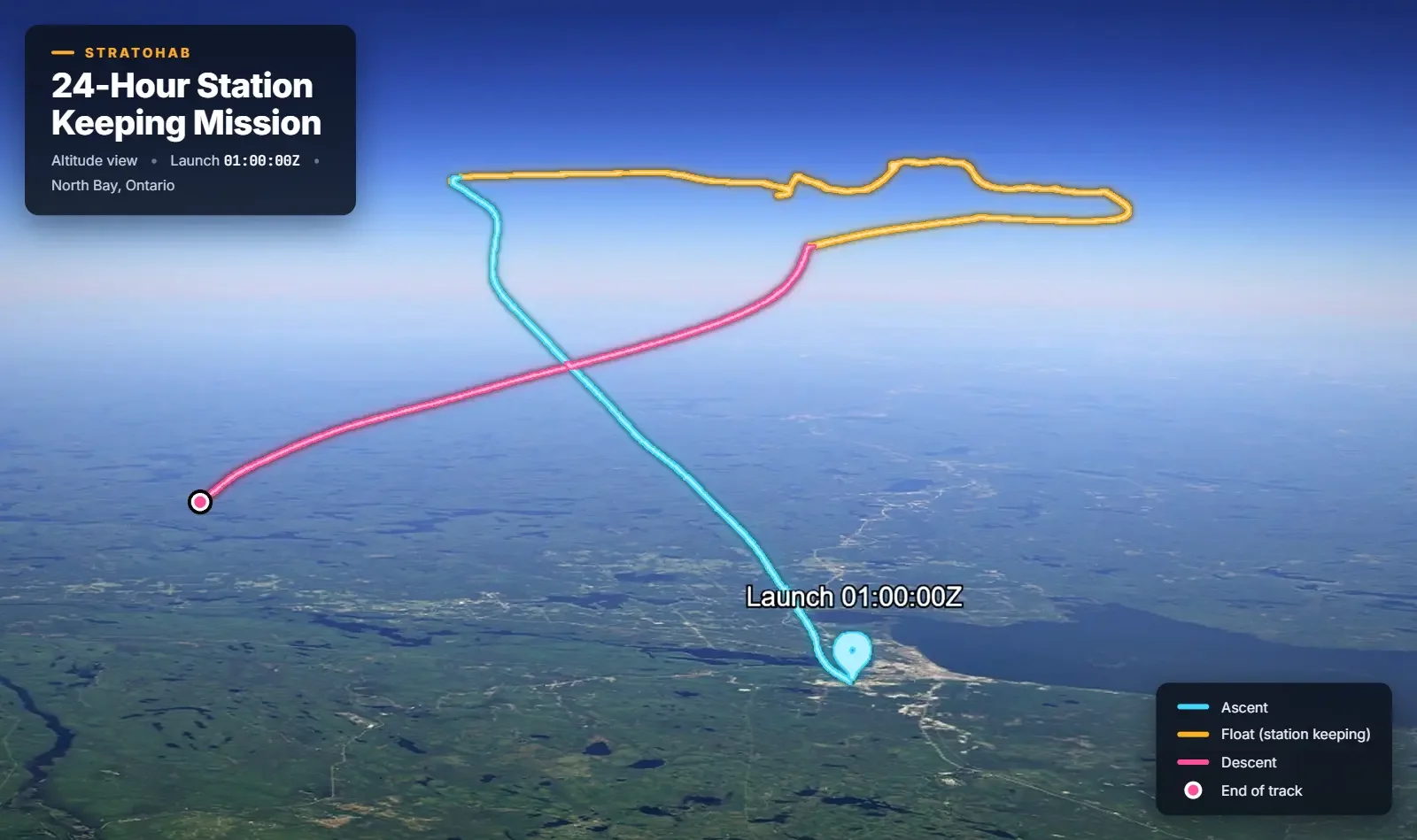
Staying over an area is the hardest part of the job. Aircraft and airships use propellers to hold position. Balloons use the wind itself: in the stratosphere, winds blow in different directions at different heights, so a balloon that can climb or descend can choose the layer moving the way it needs to go.
StratoHAB's onboard system uses wind predictions to choose those altitude changes as conditions shift, working to keep the balloon within the mission area instead of drifting away. See how StratoHAB works.
High-altitude balloons in Canada: Stratotegic and StratoHAB
Stratotegic is a Canadian company developing StratoHAB, a navigable high-altitude balloon, for wildfire response, defence and research. The idea came from co-founder Jeremy Henderson, a former Royal Canadian Air Force pilot who saw a gap in Canada's ability to monitor its vast territory. Navigation became the central challenge, so he brought in Queen's University professor Martin Guay to help balloons navigate on their own. That research grew into StratoHAB: a balloon platform built around the cameras, sensors and communications a mission needs.
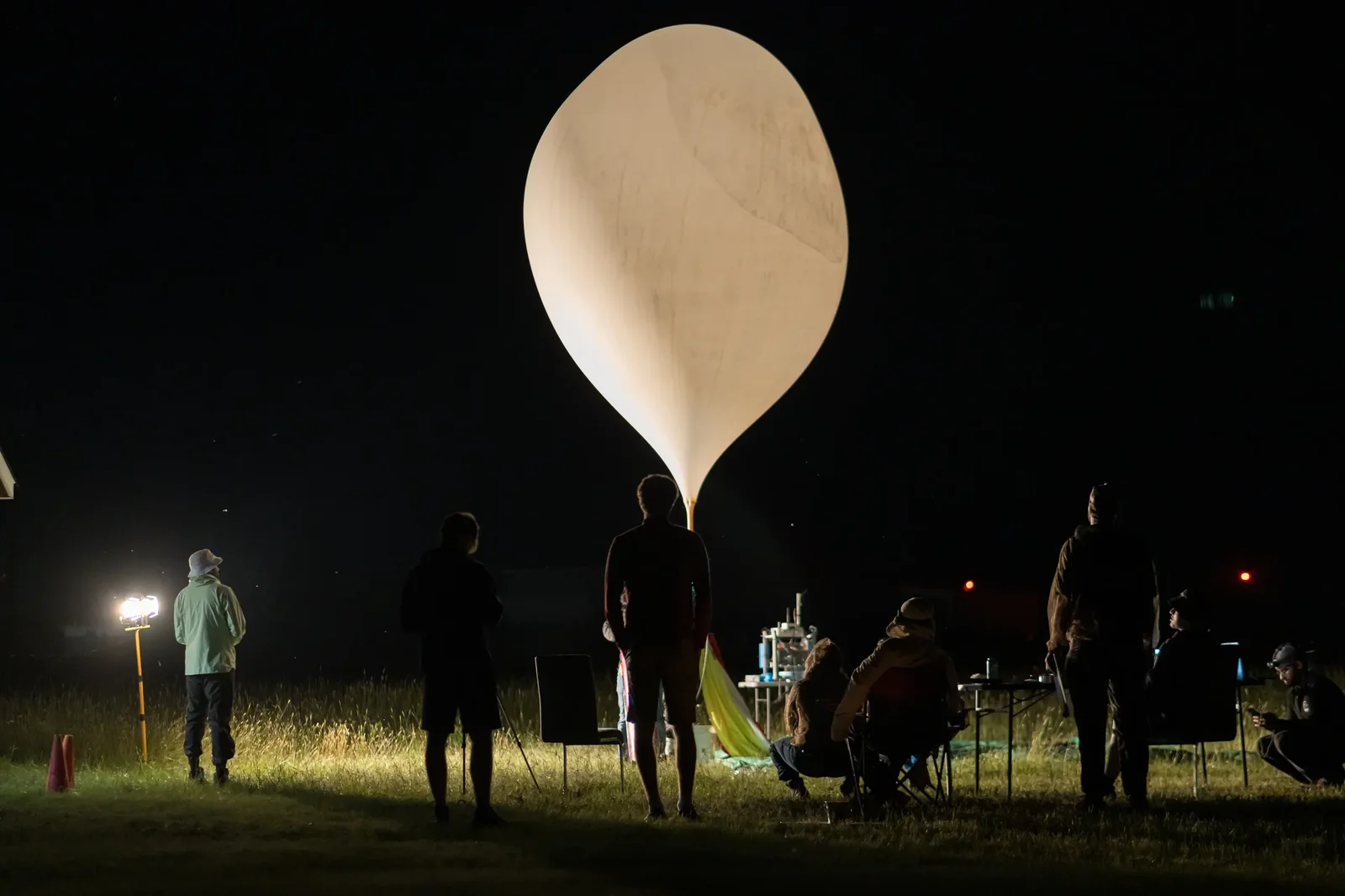
We also run HAPS missions as a service, from fire mapping and surveillance to communications and payload flights. If you want to know whether a high-altitude mission could help your team, plan a mission with us.
Frequently asked questions
What does HAPS stand for?
HAPS stands for high-altitude platform station. It is also called a high-altitude pseudo-satellite, a high-altitude platform system or, in the US, an atmospheric satellite.
Is a HAPS the same as a satellite?
No. A satellite orbits in space, hundreds or thousands of kilometres up. A HAPS flies inside the atmosphere at about 20 km. It can do some satellite-like jobs, such as wide-area observation and communications, but it launches without a rocket and can be brought back down for repairs or upgrades.
What is the difference between HAPS and Starlink?
Starlink is a constellation of thousands of low-orbit satellites providing internet worldwide. A HAPS is a single platform in the stratosphere that serves or watches one area from much closer, and can carry cameras and sensors as well as communications equipment. They can complement each other.
How high can a high-altitude balloon go?
Weather balloons usually burst around 30 to 35 km, and large scientific balloons can float near 40 km. HAPS balloons are designed to work at about 20 km for long periods.
How long can a HAPS stay up?
It depends on the design. Balloon and airship endurance depends on the materials, power system and mission plan.
Is a HAPS a drone?
Many HAPS aircraft are uncrewed, so they are sometimes called HAPS drones. Unlike ordinary drones, they work far above air traffic and are built to stay up for days or weeks.
What can StratoHAB carry?
StratoHAB carries cameras, sensors and communications equipment in a modular gondola, including a camera and gimbal and a satellite communications link. We plan each flight around the area to observe and the information the team needs.